
Blog
How translators use AI subtitles in 2026 (and what still needs eyes)
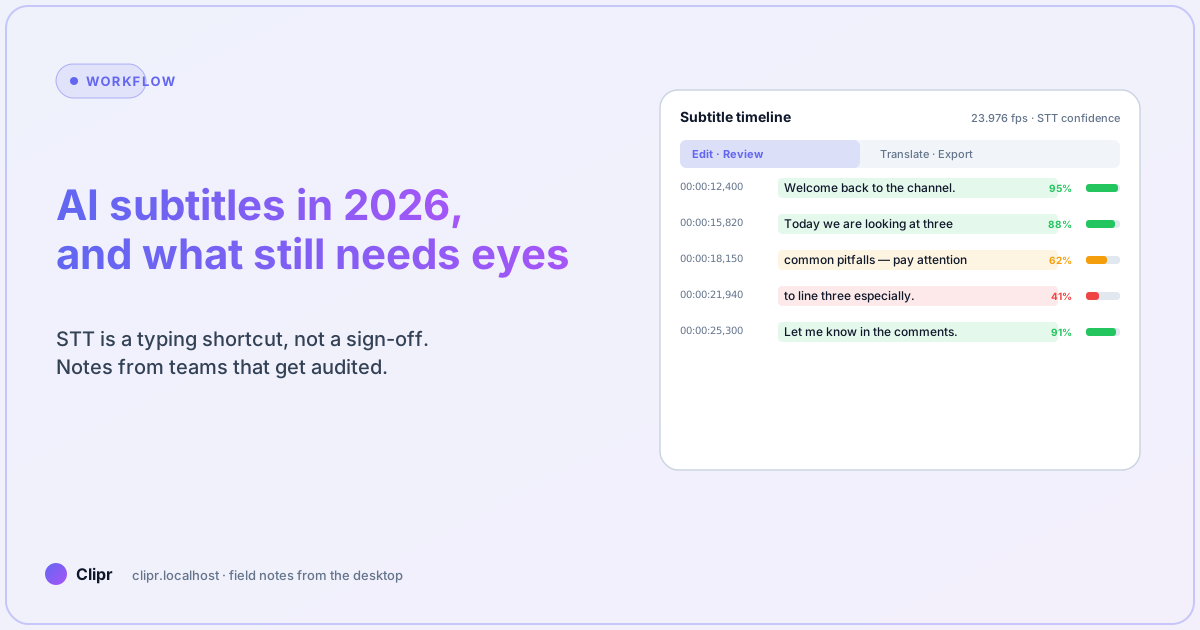
STT is a typing shortcut, not a sign-off. Notes from teams who get audited.
· translation, AI, subtitles, 2026
Article hero (SVG, 1200×630)
In January a client asked for “AI-assisted” on the SOW. In March they asked which model version produced line 612. If you cannot answer the second question, your “assist” is just theater.
Here is what trips most people up
Low-confidence spans look fine on a laptop and fall apart on a subway phone. Here is what trips most people up: nobody tested reading speed after localization.
What changed in 2026
Models churn faster, so vendors ship better STT for noisy audio—but idioms, regulated claims, and sarcasm still lose. The honest split: machines draft, humans own meaning and liability.
Practical steps
- Run STT through your server-managed vendor route (BYOK) when procurement already signed—see pricing for credit pools when they have not.
- Highlight low-confidence spans first; fix those before cosmetic line breaks.
- Store model name, glossary revision, and reviewer initials beside exports.
Tooling overview: features.
What if it does not work?
- Glossary ignored: check that the file loaded before batch jobs; empty glossaries train interns to hate you.
- Credits vanish: shift long jobs to BYOK mid-month; do not surprise finance with a silent fallback to hosted inference.
- Client disputes a line: if you logged versions, you patch and redeploy. If you did not, you negotiate from anecdote.
Closing
AI subtitles in 2026 are still subtitles: someone signs them, someone gets called at night if they are wrong. Keep receipts.