
Blog
Per-device licensing, not per-user SaaS
Why video work binds to hardware in 2026, what "honest device counts" actually means, and how this beats seat-based pricing for shops with three machines and one editor.
· licensing, devices, pricing, small-teams
Article hero (SVG, 1200×630)
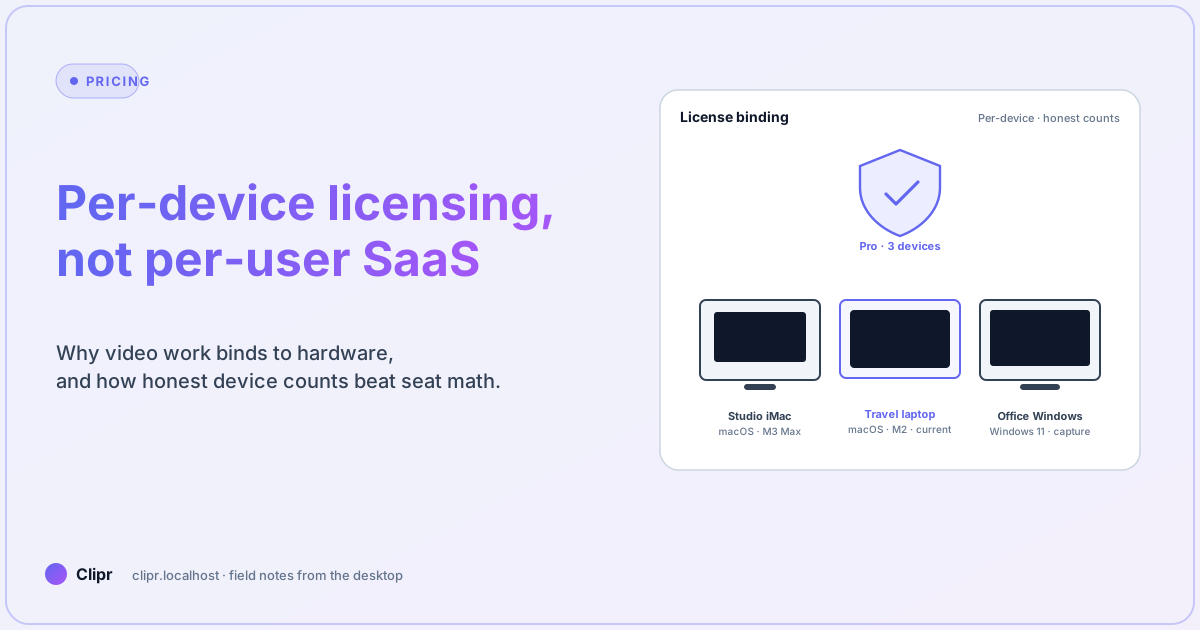
A friend of mine is the entire video team at a company. She has three machines: a studio iMac for the heavy edit, a travel laptop for hotel-room field work, and a Windows tower in the office for capturing screen recordings of a Windows-only product. She is one user. She does the work of six.
Per-user SaaS pricing punishes her. Per-device licensing fits her actual life. Most “small video teams” are some shape of this story.
Here is what trips most people up
Procurement teams default to the seat model because that is how most SaaS prices itself. Most “this tool is too expensive” complaints from one-person video shops are seat-model complaints, not feature complaints. The fix is not to buy a cheaper tool; the fix is to pick a tool that prices the way the work actually happens. For video, the work happens on machines, not in browsers, and the machines outnumber the people.
Why video binds to hardware
There is no clever metaphysics here. Video work touches hardware-coupled things:
- Encode/decode acceleration is per-machine (NVENC, VideoToolbox, AMD VCN). The same workload runs differently on different boxes.
- Color profiles are per-display. You do not move “color preferences” across machines the way you move text preferences.
- Capture devices (cameras, capture cards, screen sources) are per-machine. You cannot pretend a USB capture card “belongs to a user.”
- Drives, NLE caches, scratch space are per-machine. You cannot generalize disk layout.
- Embedded browsers for capture inherit the machine’s network stack and DNS resolver.
A seat model abstracts all of this away as “a user logs in somewhere.” That is fine for Notion. For video, the seat is fiction; the machine is the unit of work.
What “honest device counts” looks like
The Clipr tiers are explicit on this — see pricing for the full breakdown. The shape:
- Free (beta): 1 machine, daily caps, 720p ceiling. Predictable for pilots.
- Pro: 3 machines, unlimited daily, no resolution cap. Meant for the friend with a studio iMac, a travel laptop, and a Windows tower.
- Team: 5 machines per seat, pooled, with shared library and seat-aware permissions.
Three things make this honest:
- Numbers, not words. “3 devices” beats “a few devices” every time.
- Activations are reversible. When a machine is decommissioned, you reclaim the slot from a UI, not by emailing support.
- The license check works offline. Activated machines do not require a heartbeat to a server every five minutes; if your studio Wi-Fi drops, your render does not.
The third point matters more than people expect. Online-only license checks are how editors lose Saturdays.
When per-user pricing is genuinely better
This post is not “per-device is universally right.” Per-user is right when:
- The work happens in one tab in one browser (CMS, billing, project management). One user, one seat.
- The team has 50 editors and the friction of tracking individual machines outweighs the cost of paying per seat.
- Compliance requires user-level audit trails beyond what device-level logging can satisfy.
For a 50-editor agency, that probably points to a heavier MAM-class tool with seat licensing. The honest video desktop conversation is for the long tail beneath that: solo creators, 2–6 person studios, freelance pools, in-house operators. Most of them buy three machines per “seat” without anyone noticing.
The procurement story that wins meetings
When you bring a per-device tool to procurement, the conversation usually goes:
Procurement: “Why are we paying for three of these for one person?”
You: “Because the studio iMac, the travel laptop, and the Windows tower each do work the others cannot. The license is bound to the hardware that does the encoding. The total cost is one Pro tier, $9.99/month — for three machines that would otherwise be $30/month on a seat-based competitor.”
Procurement: “OK.”
The math has to actually work, not just sound good. The reason it works for video specifically is that the per-device price is set assuming people own multiple devices for this work; it is not the price of one seat divided by three machines.
When you outgrow per-device
You will, eventually. The tells:
- More than 5 active machines per editor.
- Multiple editors who need to coordinate on the same library in real time.
- A compliance posture that demands seat-level audit trails.
At that point you upgrade to Team (5 devices per seat, pooled), and the device model just becomes the implementation of the seat. You stop counting machines individually. The transition is meant to be smooth — you do not have to change tools, you change tier.
What “honest” means in practice
Three checks for any tool that says “per-device”:
- Can you list your activated machines from a UI (not by emailing support)?
- Can you reclaim a slot in under 10 seconds?
- Does the price scale 1×, 2×, 3× with device count, or does it suddenly jump 10× at some threshold?
If a tool fails any of these, the device count is window dressing on a seat model.
What if it does not work?
- You hit the 3-device cap with a fourth machine that should not count (a CI runner, a shared rendering box): the right answer is a Team tier with pooled devices, not paying for an extra Pro license. The wrong answer is sharing accounts across machines.
- A machine died and you cannot reclaim its slot: the reclaim flow should be self-serve. If it is not, the tool is failing the “honest counts” test.
- Your laptop and desktop have the same MAC address (you cloned a VM): the license fingerprint will refuse the second activation. Fix the fingerprint at the OS level; do not fight the license check.
- You travel and want to use a borrowed studio machine for one day: many honest per-device tools allow a temporary “loaner” activation that auto-expires. Worth checking the policy before assuming you cannot.
- An editor leaves the team and their machine still has an active license: deactivate from the team console. Do not wait for the heartbeat to lapse.
A note on “Pro is planned”
Right now the pricing page is honest about Pro and Team being planned. The device model is locked-in design; the monthly number is what may shift slightly before launch. If you are a beta user today, the device counts above are what will ship — see the pricing page for the grandfathering note.
Closing
Per-device licensing is not a clever marketing angle. It is the way video work actually happens in 2026: one human, three boxes, real hardware constraints. Tools that price along this axis stop punishing the people who do the most work, and let procurement say yes to the actual cost rather than working around it.
For the per-tier description, see pricing. For the features each tier unlocks, see features. To check whether your machine count fits the model, download the beta and activate on the boxes you actually use.