
Blog
BYOK vs bundled AI credits: a 2026 decision guide
When routing through your OpenAI / Anthropic vendor beats a bundled credit pool, and when it does not. Sample budgets, procurement notes, and an escape hatch.
· BYOK, AI, pricing, procurement
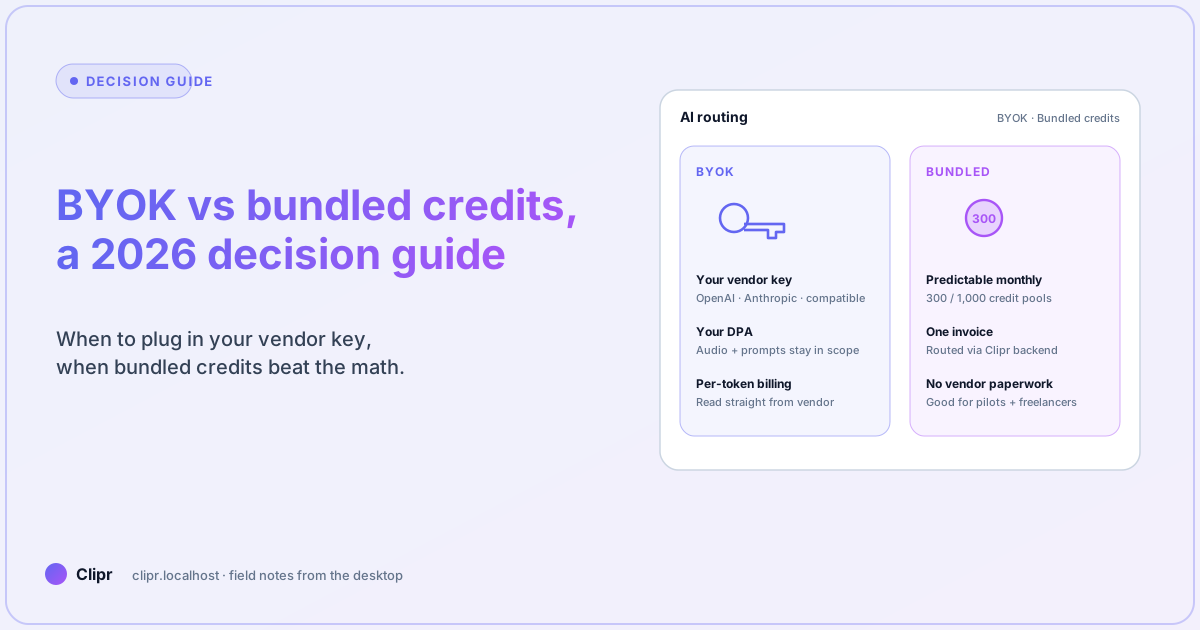
Article hero (SVG, 1200×630)
Every video team in 2026 ends up with the same fork in the road: pay our managed AI line item, or route jobs through the OpenAI / Anthropic / compatible vendor procurement already approved last year. Both work. The math and the paperwork are different.
This is the cheat sheet we wish we had when we first wrote the BYOK toggle.
Here is what trips most people up
Teams pick BYOK because “we already have a vendor contract” — and forget that the provider route still needs an owner, limits, and audit policy. Then audio jobs spike on a Friday and the freelancer in Lisbon hits a vendor rate-limit you did not configure. Most failures here are not pricing failures, they are routing failures. Decide who owns the server-side provider profile, how limits are set, and what happens when it 429s.
Quick pick
- You are a single creator on one machine → BYOK, no question. Your monthly AI bill will rarely beat the bundled tier and you keep one vendor relationship.
- You are a small studio with a procurement team that already signed a DPA → BYOK on Pro tier. Bundled credits exist for the times you forget to top up.
- You are an agency on three clients with three different DPAs → BYOK per client (separate server-side provider profiles), bundled credits as the office fallback. Tag jobs with the client identifier so finance can reconcile.
- You are running a translator pilot and have not picked a vendor yet → bundled credits for the first month, then re-evaluate. Do not blow procurement time on a vendor you have not tested.
Sample budgets (back-of-envelope)
| Workload | BYOK monthly | Bundled (Pro · 300 cr) | Bundled (Team · 1,000 cr) |
|---|---|---|---|
| 4 hr STT + 12 short translations | ~$8–14 | covered | covered |
| 20 hr STT + 200 translations | ~$60–90 | overflows by ~3x | covered |
| 80 hr STT + bulk localization | ~$200–300 | overflows ~9x | overflows ~2x |
These numbers move every quarter as vendors shuffle pricing. Treat them as triage, not a quote. The point is: bundled credits make sense when you cannot afford an unpredictable invoice this month, BYOK makes sense when you cannot afford to onboard another vendor this quarter.
What BYOK actually saves you
- A second DPA review.
- A second invoice line in the AP system.
- A second support contact when audio quality regresses on a model swap.
- A second permissions review for whoever needs to read finished captions.
That is the entire pitch. If your org already pays the cost of one vendor relationship and the marginal cost of another is non-zero (it always is), BYOK pays for itself in calendar time alone.
What bundled credits actually save you
- Reading rate-limit docs at 11pm.
- Tracking model name churn across vendors.
- Manually splitting batches when one provider deprecates a region.
- Explaining “why is the AI line item exactly $87.32 this month” to the CFO.
The honest bundled-credit pitch is predictability, not price. You are paying us to swallow the lumpy parts.
Switching mid-month
You should be able to. Inside Clipr, BYOK and bundled coexist; if a BYOK request fails open with a vendor outage, you can flip the heavy locales to bundled credits without restarting the project. Save the diff in a comment on the job — “switched to bundled at 14:32, openai 503 on us-east” — so the next person who looks at the bill knows what happened.
What if it does not work?
- BYOK provider route 403s mid-batch: check vendor dashboard for spend limits before retrying; many ops set a $50 cap and forget about it. Do not loop retries; you will look like an attacker.
- Bundled credits ran out before the deadline: flip the rest to BYOK and refill bundled at month boundary; do not panic-buy add-on credits at premium rates.
- Audit asks “which vendor processed line 412”: keep a JSON-LD job log per export with model name, provider profile id, timestamp, and reviewer initials. Future-you will thank present-you.
- Procurement bans new vendors mid-quarter: stay on bundled credits; the workflow does not change, only the line item does.
A note on regional routing
If your DPA explicitly requires EU-only inference, BYOK is the only honest answer today. Bundled credits route through whatever region the underlying provider serves; we will publish a region-pin option when enough customers ask, but right now the safe answer is a server-side EU-pinned provider route.
Closing
There is no clever trick here. BYOK is for teams who already pay one AI vendor and want to keep the count at one. Bundled credits are for teams who want one less calendar invite to procurement. Most operations end up running both, just for different reasons on different jobs.
The decision is not which tier to pick on the pricing page — it is who in your team owns the provider profile, where the credits sit, and what the audit log looks like the morning after. Decide that, and the rest is bookkeeping.
If you want the per-feature view of how the routing works in the app, the features page lists the BYOK and bundled paths side by side. If you just want to try it, download the beta and the toggle is in Settings → AI.